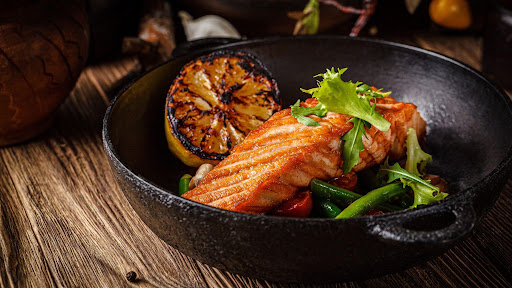
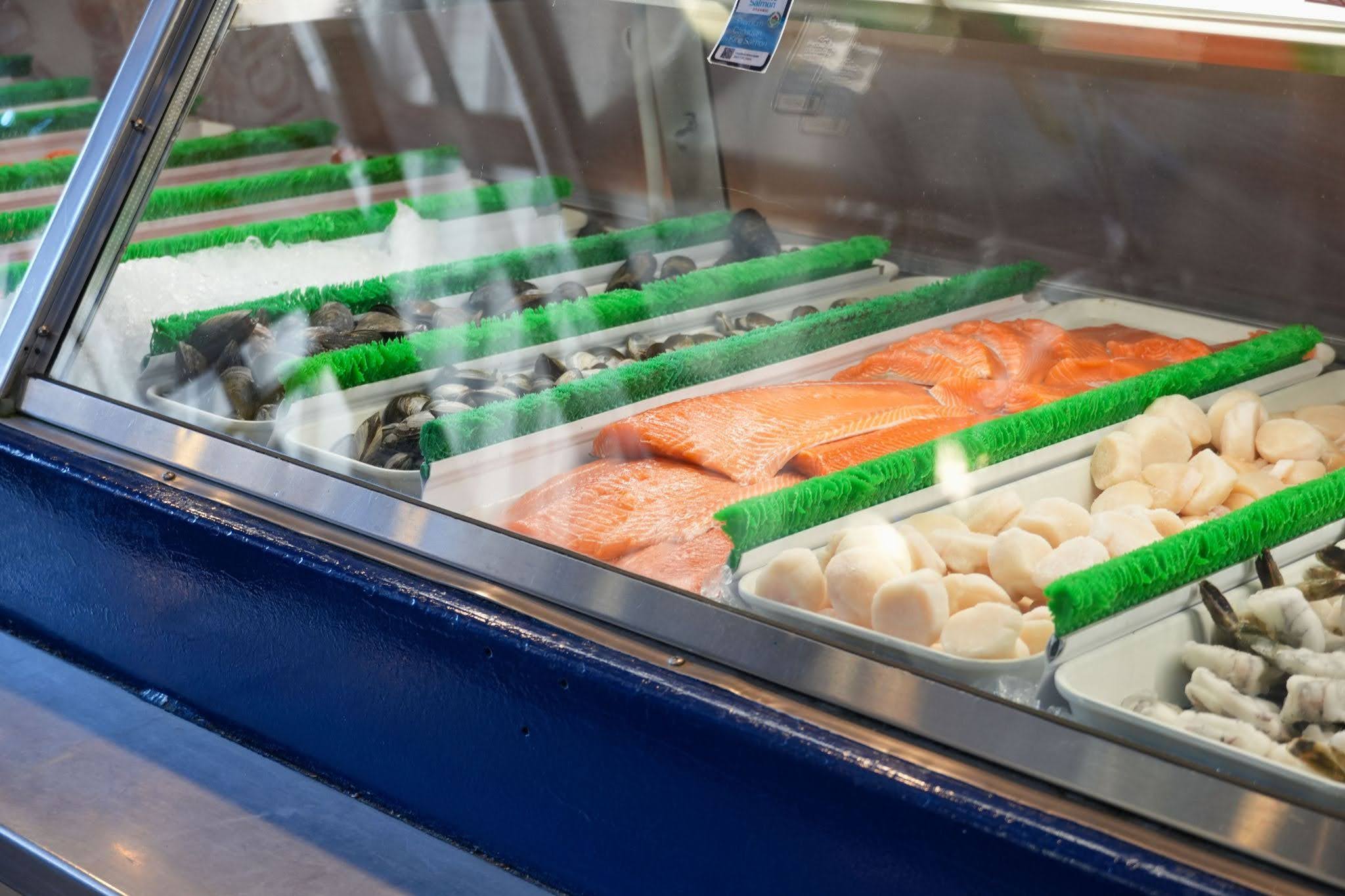
GLP-1s are prescription drugs for diabetes and weight loss. Many people who take them report a smaller appetite. Shoppers on GLP-1 medications often shop with protein and portion size in mind.
Chicken and turkey are easy fits for that shopper. Both are familiar, and the label lists the protein in grams.
Seafood fits too. Fish and shrimp pack protein into a small portion; cod is lean, and salmon adds omega-3 fats. But a shopper at the seafood case has to work out which fillet to buy, how much to take, and whether they’ll cook right. That gap is where sales slip away. Closing it depends on the product mix, pack size, and what the tag says.
How many shoppers are on a GLP-1 right now?
About 1 in 8 US adults say they currently take GLP-1 prescription drugs. A November 2025 KFF poll put the number at 12%, and it continues to increase.
The share changes a lot by group. KFF found 15% of women and 9% of men currently take one. Among adults 50 to 64, the number jumps to 22%. For adults 65 and older, it drops to 9%.
Now think about your own store. If your shoppers match the national numbers, about 12 of every 100 people who walk in are on one.
That is a big slice of your traffic, and every one of them still has to decide what protein goes in the cart.
You can’t spot them in the aisle. Nobody wears a label, and nobody mentions it at the counter. If your case says nothing to them, they will pick from whichever part of the store does.
A clear message and a portion that fits can win a share of those 12 shoppers. Market to them on purpose, and seafood gets a real shot at more of their baskets and more of your sales.
What do GLP-1 shoppers look for when they buy protein?
GLP-1 shoppers look for the most protein they can get from a small portion, and seafood fits that well. A smaller appetite leaves less room on the plate, and eating less can mean not getting enough protein. Protein helps maintain muscle, so it gets the first claim on that space.
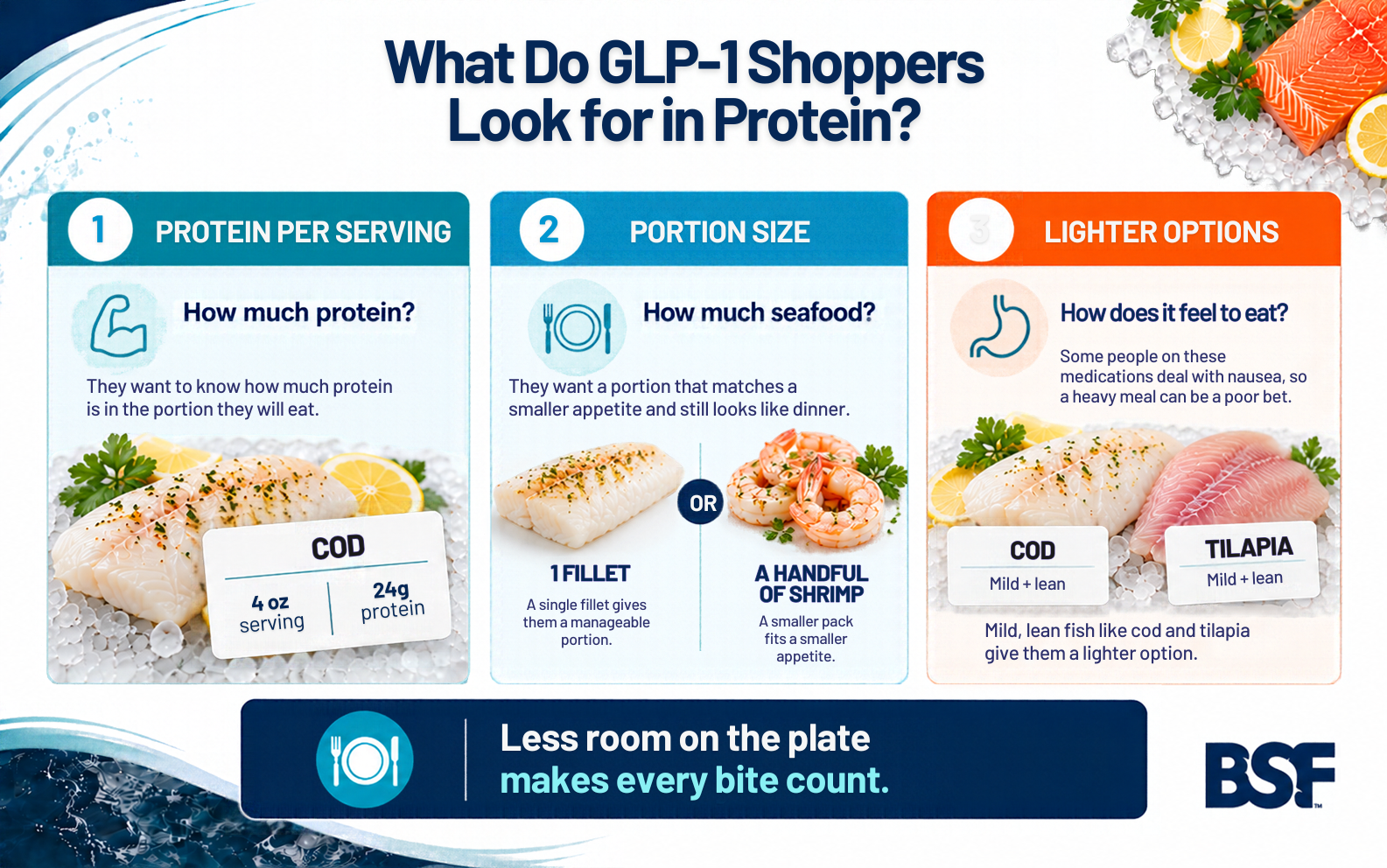
At the protein case, they check three things:
- Grams per serving: They want to know how much protein sits in the portion they will eat. In your seafood case, that means the number for one cod fillet or one serving of shrimp, not only the price per pound.
- Portion size: They want a portion that matches a smaller appetite and still looks like dinner. In your seafood case, that’s one fillet or a handful of shrimp. A tray built to feed four makes the sale harder.
- Food that sits easy: Some people on these medications deal with nausea, so a heavy meal can be a poor bet. In your seafood case, mild, lean fish like cod and tilapia give them a lighter pick.
Seafood fits all three. Your case has to say so before the shopper has to ask.
Why does seafood fit what GLP-1 shoppers want?
Seafood gives GLP-1 shoppers protein and a kind of fat most other proteins don’t offer.
In terms of protein, cod, tilapia, and shrimp are lean, which means they carry very little fat, so the protein comes with fewer calories. Lean cuts of chicken and turkey do the same, so seafood holds up even with them on that point.
The fat is where seafood pulls ahead. Salmon is a fattier fish, and much of that fat is omega-3. Omega-3s are fats the body needs and gets mostly from food. Fish are one of the best sources, and most other everyday proteins carry far less. They’re also linked to heart health.
Then there’s variety. A shopper who builds meals around a few familiar proteins can get tired of them. Seafood adds a second lane, with mild fish on some nights and richer salmon on others.
How much protein is in a 3 oz serving of cod, shrimp, salmon, and tilapia?
A 3 oz cooked serving of any of these four has about 20 to 24 grams of protein.
Three ounces cooked is roughly the size of a deck of cards. Seafood loses water as it cooks, so you start with about 4 oz raw to end up with that much cooked.
| Seafood | Protein | Calories | Fat |
| Cod | 20 g | 90 | 1 g |
| Shrimp | 21 g | 100 | 1.5 g |
| Tilapia | 22 g | 110 | 2.5 g |
| Salmon | 24 g | 200 | 10 g |
Protein stays close across all four. Calories are where they separate. Cod, shrimp, and tilapia land between 90 and 110, and salmon runs about double. Salmon’s numbers also shift by species and between farm-raised and wild seafood.
How lean is seafood compared with what’s usually on the plate?
Cod, shrimp, and tilapia are about as lean as skinless chicken and turkey breast.
This matters because a smaller appetite leaves less room. The leaner the protein, the more of that room goes to protein and the less to fat. A 3 oz serving of cod and a 3 oz patty of 90% lean ground beef both carry about 20 grams of protein. Cod has about 90 calories, and beef has about 175.
Fat also slows digestion. Rich food stays in the stomach longer, which can feel heavy to a shopper who already fills up fast.
Skinless chicken and turkey breast land in the same lean range as cod and shrimp, with a few more grams of protein per serving. Salmon runs about 10 grams of fat per serving, close to a lean burger, so it suits a shopper who wants a richer plate and has room for it.
What should category managers change in the seafood case?
Your case already holds the protein these shoppers want. These six changes put the proof where they can see it.
- The tag: Put the protein per serving on the shelf tag or case sign, in grams, with the serving size next to it. A cod tag might read “3 oz cooked, 20 g protein, 90 calories.” Stick to facts about the food and skip phrases like “GLP-1 friendly.”
- The price: Most tags show a price per pound, but a shopper buying one serving thinks in meals. Add the price per serving next to the price per pound. If cod sells for $12 a pound, a 4 oz portion costs $3.
- The pack: Sell single servings. A sealed pack with two single-serving cod portions suits a smaller appetite better than a one-pound tray. Frozen packs help too, since a shopper can take out one portion and leave the rest.
- The lineup: Give shoppers a range from lean to rich, and make the lean end easy to find. Put cod, tilapia, and shrimp up front, with salmon beside them, and label each clearly. Keep plain, unbreaded options within reach.
- The placement: Think about where a shopper planning protein walks. If your seafood case sits at the far end of the store, try putting a small set of single-serving fish near the other proteins.
- The counter: Give your team a one-page sheet with the protein and calories for your top fish, plus a plain answer on which are lean and which are rich. When a shopper asks, they’ll get a direct number.
Which seafood should you point GLP-1 shoppers to first?
Start with shrimp, cod, and tilapia, then bring in salmon. The first three are lean, mild, and cook in minutes, so they ask the least of a shopper who is still finding out what sits well.
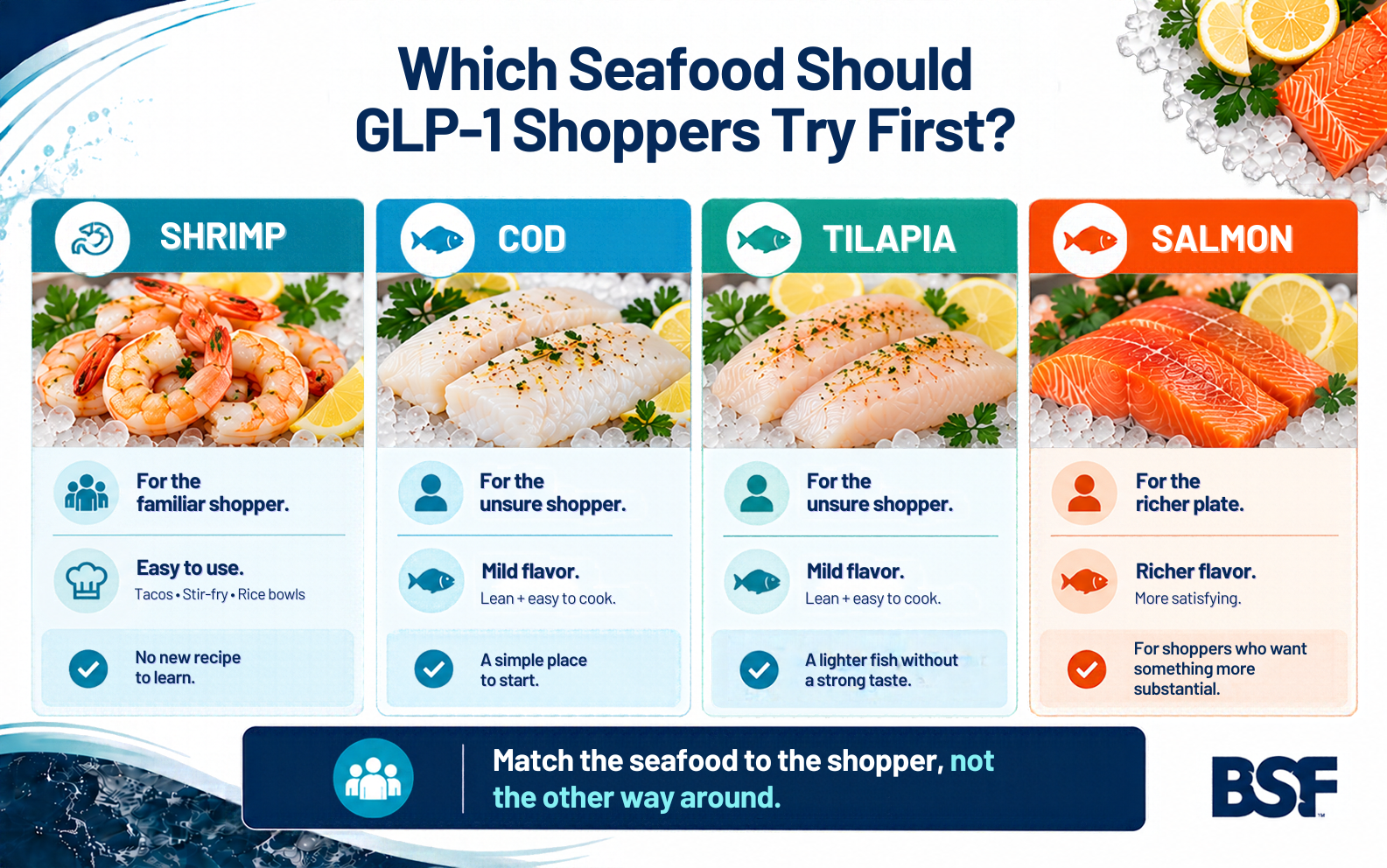
Describe each fish by what it’s like and let the shopper choose.
Shrimp for the shopper who wants something familiar. Most people already know what to do with it, whether that’s tacos, a stir-fry, or a rice bowl. There’s no new recipe to learn.
Cod or tilapia for the shopper who is unsure about fish. Both have a mild flavor, with none of the strong taste people link to oilier fish.
Salmon for the shopper who wants a richer plate. It’s the richest of the four, so it suits someone who has room for it.
What portion sizes should your seafood case offer?
Build the case around a 4 oz portion and offer a half-pound pack for two. A quarter pound makes a full plate for a smaller appetite, and it’s easy to explain.
Shrimp needs more translation, because the count on the bag means shrimp per pound. A 16/20 count means 16 to 20 shrimp in a pound. Four ounces is a quarter of that, so a portion holds 4 to 5 shrimp at 16/20, about 6 to 8 at 26/30, and 10 to 12 at 41/50.
Put that math on the tag. Nobody can read a count by looking at it, and the industry never explained it. If the tag shows a count, say whether it’s peeled or shell-on, since shell-on shrimp give less meat per ounce.
Cut large salmon fillets and cod into 4 oz pieces ahead of time, and keep a few in the case. If a shopper has to ask for a quarter pound, they also have to do the math.
For frozen shrimp, look for bags that are individually quick frozen, which means each shrimp freezes on its own and not in one block. A shopper can pour out a handful and reseal the bag.
How do you explain price per meal instead of price per pound?
Show the cost of one serving right beside the cost of a pound, and do the division for the shopper.
The math is short. A pound is 16 oz, and a 4 oz serving is a quarter of that, so you divide the pound price by four. A salmon fillet at $14 a pound costs $3.50 a serving. A shopper who sees “$14” and stops reading may think salmon costs too much for one dinner. “$3.50 a serving” tells them what dinner costs.
Count what the shopper can eat. Shell-on shrimp, bone-in fish, and whole fish carry weight that ends up in the trash.
The pound price covers all of it, so a serving costs more than the plain division shows. Base the serving price on the edible weight, and say that on the sign.
Print the serving price in the same size type as the pound price. But make sure to keep the pound price on the tag. A family buying for four still shops that way, and the pound price lets them compare across the case.
Are your shoppers moving seafood spending to restaurants and the deli?
For food in general, yes. Circana’s research on GLP-1 shoppers shows more restaurant spending and stronger deli sales, while retail food spending falls.
The reason it makes sense is simple. A restaurant plate or a deli container comes finished. The shopper doesn’t pick a fish, guess a portion, or cook it for one. For a shopper who wants less, that removes most of the work.
That is why the deli is important. It’s the one place in your store that can compete with a restaurant plate. In July, I told Supermarket Perimeter that there is a lot of potential for seafood in the cold case.
A deli should carry cold options like tuna ceviche and pre-cooked grilled salmon that a shopper can add to a salad or eat cold, along with hot case items like fried shrimp and fish for sandwiches. Each one is a restaurant-style portion a shopper can pick up and eat that night.
Check deli seafood next to your case sales. If the case slips while the deli grows, the shopper still moves a few feet and stays in your store.
What is the first change you should make?
Start with the price per serving on the tag. It’s the first number a shopper reads, and it works on the packs you already carry.
New pack sizes take time to source, and a tag change moves faster. Put it on a handful of items and compare their sales with the items that don’t have it.
BSF has been in this business for decades, and the work still comes down to making seafood easier to understand, buy, and trust. A shopper who can see what one dinner costs is already closer to buying it.
FAQ
What do GLP-1 shoppers buy at the grocery store?
GLP-1 shoppers buy fewer sweets and snacks, and more fresh produce and protein. In PwC’s May 2026 survey, most current users said they buy fewer sweet treats and fewer salty snacks, and many said they buy more fresh produce.
Are GLP-1 shoppers moving to different kinds of stores?
A few of them are. About a year after starting the medication, GLP-1 shoppers tend to shift spending toward club stores, value grocers, drug stores, and online shopping, and away from traditional grocers and convenience stores.
Do GLP-1 shoppers choose fresh or frozen protein?
GLP-1 shoppers buy both fresh and frozen protein. In PwC’s May 2026 survey, 35% of current GLP-1 users said they buy more packaged protein and 34% said they buy more fresh protein.
Can I call my seafood “GLP-1 friendly”?
I’d skip it. The phrase reads as a health claim about a medication, and your tag can’t back it up. Put the grams of protein and calories per serving on the sign instead, and check your own claim rules before you print it.
How much seafood should adults eat each week?
Adults should eat at least 8 ounces of seafood a week, according to the 2025-2030 Dietary Guidelines for Americans. That works out to about two 4 oz servings, and the guidelines recommend less for children.
Is seafood still a good choice if you’re not on a GLP-1?
Yes. Cod, shrimp, and tilapia give any shopper 20 to 22 grams of protein in a 3 oz cooked serving for 90 to 110 calories, and salmon adds omega-3 fats. None of that depends on medication, so the same case and the same tags work for every shopper.