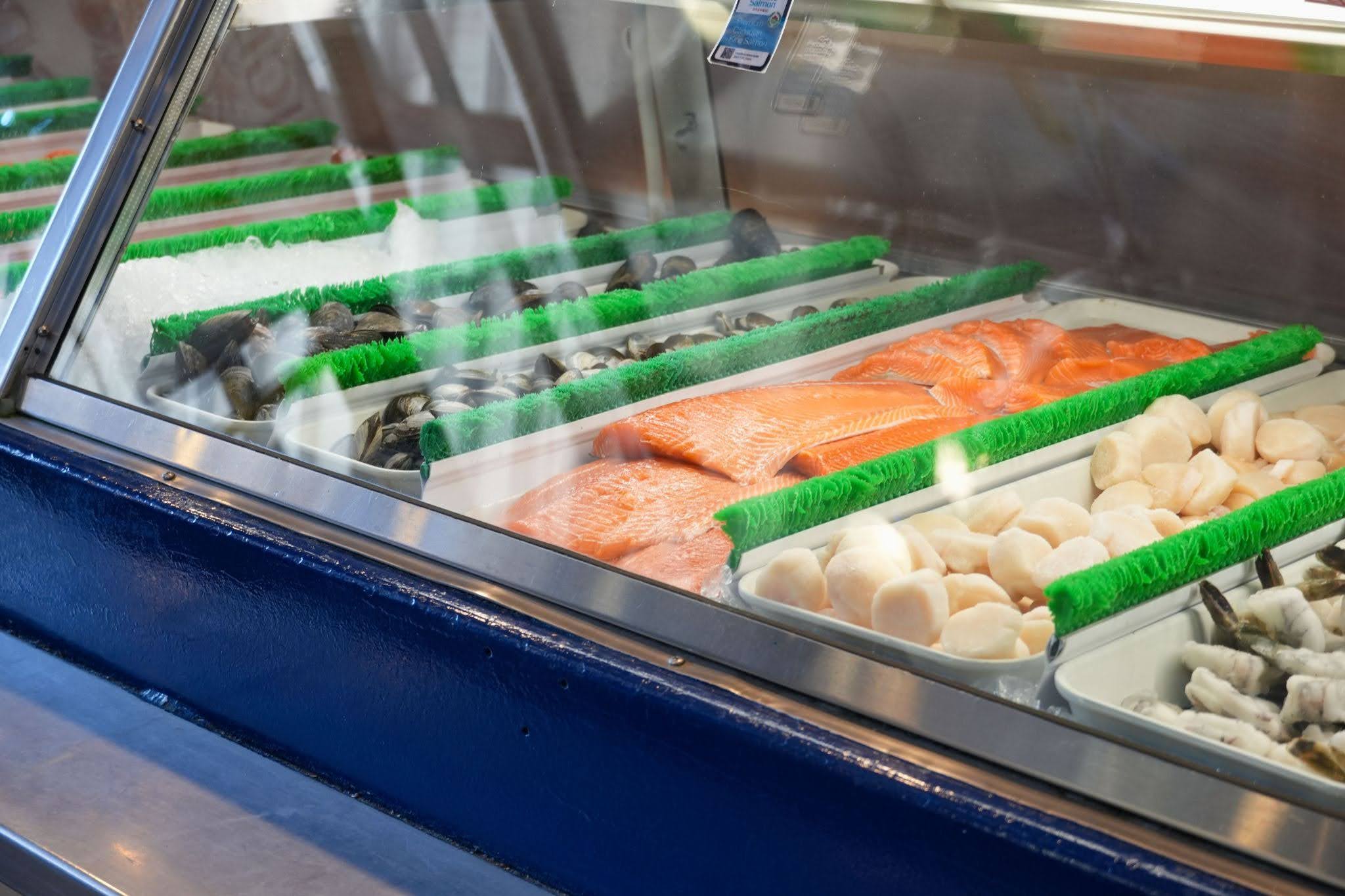
Fresh costs more than frozen at almost every seafood counter in the country. That price gap convinces people that fresh must be better.
The fresh case provides the convenience of ready-to-prepare items for consumer: no prep, no thawing, just ready to cook. This can drive the price up in addition to the store employees portioning and weighing items.
But your fresh fillet may have been frozen and thawed before it ever hit the case. And the shrimp in that bag could be higher quality than anything sitting on ice.
Fresh and frozen aren’t opposites. They’re just two different points in the same journey from the water to your kitchen. What actually decides quality is how the seafood got handled along the way.
Is frozen seafood actually lower quality than fresh?
Frozen seafood is not automatically lower quality than fresh. Quality depends on how your seafood was handled.
A few things actually decide whether seafood turns out good or bad:
- How fast it was frozen
- How it was handled before that freeze, from boat to processor
- How the seafood was sourced
- How it was packaged
- How long it sat in the freezer before it reached you
- How it gets thawed once it’s in your kitchen
The fresh or frozen label tells you almost none of that.
The confusion comes from an outdated idea. Freezers used to work slowly, and slow freezing does damage seafood. It forms large ice crystals inside the flesh, and those crystals rupture the cell walls. That’s the overly soft texture people associate with frozen fish, and it’s a fair complaint about old freezing technology.
Modern freezing doesn’t work that way anymore. Fast freezing forms ice crystals too small to do that kind of damage.
What does “fresh” seafood actually mean?
“Fresh” means the fish never went below freezing. It doesn’t promise anything about how long ago it was caught, how far it traveled, or how it was handled on the way to your store.
Many shoppers assume fresh means recently caught. Sometimes it does. Often, it means recently thawed, or the fish sat on ice for several days before it reached the counter.
Was your fresh fish ever frozen before it hit the counter?
Often, yes. Most stores are required to flag it too, usually with a small “previously frozen” tag near the price. It’s easy to miss if you’re not looking for it.
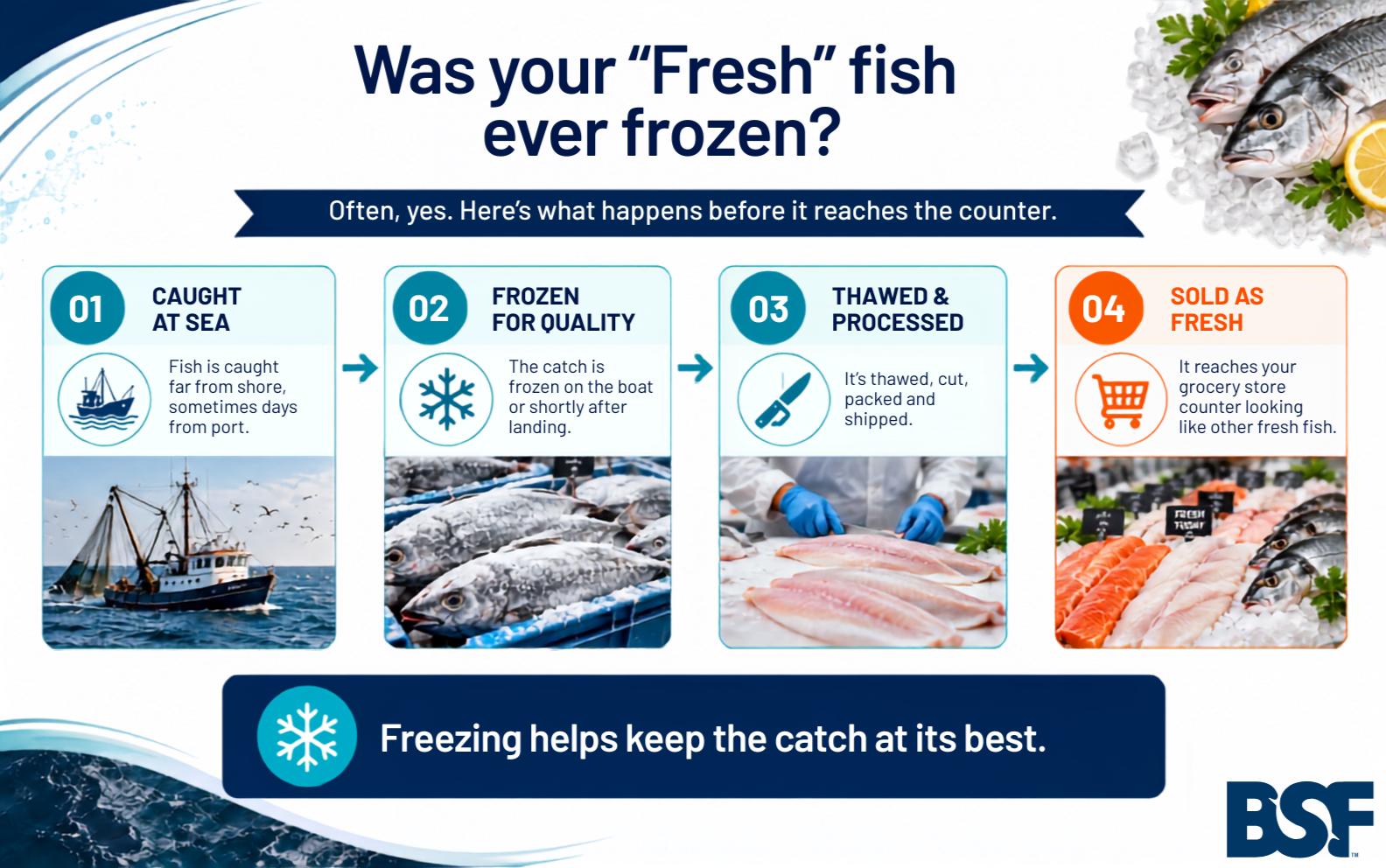
Here’s how it happens. A boat catches fish far from shore, sometimes days from port. To keep that catch safe, it gets frozen right on the boat or shortly after landing. That’s standard practice.
That fish then gets thawed at a processor or distributor, so it can be cut, packed, and shipped as a fresh product. By the time it reaches your grocery store, it looks and gets sold exactly like fish that was never frozen at all.
There’s a real reason boats freeze the catch at sea, and it comes back to the clock. Held at a steady 32 degrees, a fresh fillet holds peak quality for about 8 days before it starts to slip, and the edible window closes around day 14. A boat that’s out for a week or more can’t outrun that timeline without freezing the catch first.
That clock keeps running everywhere. I talked about managing a supply chain that spans more than 50 countries on a podcast a while back, and a lot of it comes down to exactly this: keeping quality intact over distance most people never think about.
So next time you’re at the case, that little tag is worth a second look. If you’re buying fresh for the quality, that’s a fine reason either way. But if you’re assuming a fillet skipped the freezer entirely, check for the tag before you assume.
Does freezing change the taste or texture of seafood?
Freezing itself doesn’t alter texture. What happens after freezing usually does.
The real culprit is freezer burn. That’s what happens when air reaches the surface of the fish through a poorly sealed package, drying it out.
It doesn’t make the fish unsafe to eat. It just makes those spots dry and tough once cooked.
So, this isn’t really about freezing as a process. A fish frozen quickly and sealed well keeps its texture close to how it was the day it was caught. Handle that freeze right, and it can beat the fresh fish outright.
Why can frozen seafood sometimes taste better?
Freezing stops spoilage in its tracks, while ice only slows it down.
The moment a fish comes out of the water, enzymes inside it start breaking down proteins and fats. That process just moves slower on ice. Every extra day on ice is another day those enzymes keep working, which is part of why fish loses its bright, clean flavor the longer it sits.
Freezing, on the other hand, halts that process almost completely. A fish frozen within hours of the catch stops right there, at its best moment, and stays that way until it thaws.
This matters even more with fatty fish like Salmon and Chilean Sea Bass. The fat in those species starts to oxidize once it’s exposed to air and time, and that oxidation is what creates the “fishy” taste people associate with old fish. Freezing slows that oxidation down dramatically.
None of this means fresh loses by default. A fish caught locally and sold the same day skips that window entirely, and it’s going to taste great. But once distance or time gets involved, a fast freeze at the peak often protects flavor better than any amount of ice can.
How should you thaw frozen seafood without ruining it?
Move it from the freezer to the fridge the night before you plan to cook it. That method works best, and it just takes a little planning.
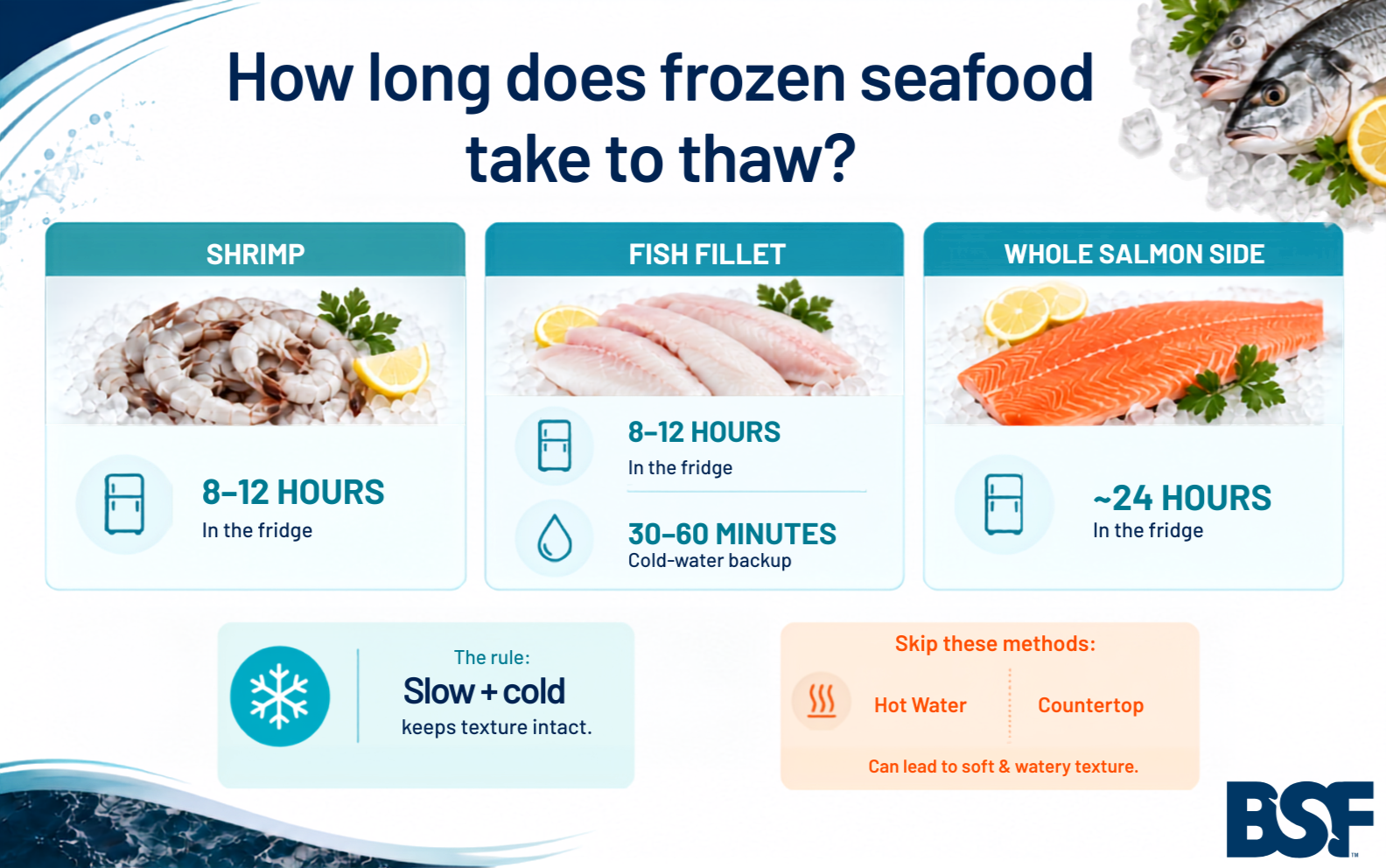
A pound of shrimp or a couple of fillets usually thaws in 8 to 12 hours this way. A whole salmon side takes closer to 24 hours. Slow and cold keeps the texture close to what it was the day it got frozen.
If you forgot to plan, cold water works as a faster backup:
- Seal the fish in a leak-resistant bag if it isn’t already.
- Submerge it in a bowl of cold tap water.
- Change the water every 30 minutes to keep it cold.
Most fillets thaw in 30 minutes to an hour. You should skip both hot water and the counter. Both warm the outside of the fish while the inside is still frozen solid, and that mismatch is what turns a fillet soft and watery once it’s cooked.
Do not thaw your fish, change your mind, and refreeze it raw. That extra freeze-thaw cycle breaks down the texture. If you know you won’t use it, cook it first, then freeze the cooked portion instead.
When does fresh seafood actually have the edge over frozen?
A fish caught that morning and in your kitchen by evening skips every problem we have covered so far. Here’s when that actually plays out.
Dock or local market seafood: Bought straight from a dock or a local fish market selling same-day catch, with no transit time working against it.
Live shellfish: Oysters, clams, and mussels need to stay alive until you cook or eat them, so freshness isn’t optional here the way it is with fillets.
Whole fish cooked the same day: The skin and the flesh near the bone show freshness fastest, so a whole fish you’re cooking right away shows off fresh at its best.
Raw preparations: Dishes like ceviche or crudo have no cooking step to smooth over small texture differences, so the fish itself has to hold up on its own.
Outside of same-day, local, or raw situations, fresh loses its built-in advantage fast. A fresh fillet that traveled for three days before it reached your store is competing with frozen fish on a much more even field, and sometimes losing.
How can you tell if frozen seafood at the store is good quality?
Look at the bag before you look at the price tag. Good frozen seafood usually shows itself. Here’s what to check.
No frost or ice buildup inside the bag: Frost means the fish warmed up and refroze at some point. A clean bag with no visible frost is a good sign.
Fish that’s firm through the bag: Individual pieces should feel separate and solid. A clump usually means it thawed and refroze somewhere along the way.
A tight, vacuum-sealed package with little to no air inside: Air trapped in the bag is what leads to freezer burn. Less air around the fish means a longer window before quality starts to drop.
Shrimp or fish pieces you can separate: This usually means it was frozen individually, so you can pull out only what you need instead of thawing the whole bag at once.
None of these checks take more than a few seconds at the case.
What actually matters the next time you’re at the case.
Forget picking a side. Fresh and frozen were never really competing with each other.
The real skill is knowing which questions to ask:
Check for a catch date on frozen.
Ask if today’s “fresh” cod ever saw a freezer on its way in.
Notice how the fish is packaged, not just what section it’s sitting in.
Those few seconds of looking tell you more than the label by itself ever will.
That’s the whole idea we work from at BSF too. 70+ years in this business have taught us that quality lives in the handling, not in whether something says fresh or frozen on the label.
Judge the seafood, not the label on the case.
FAQs
Is frozen seafood safe to eat?
Freezing doesn’t make seafood unsafe. It actually helps prevent spoilage by stopping bacterial growth. As long as it’s handled properly before freezing and thawed correctly, frozen seafood is just as safe as fresh.
Does freezing fish reduce nutrition?
No, not in any way that matters. Freezing locks in a fish’s nutrients at the point it’s frozen. Fresh fish actually loses some nutritional value the longer it sits on ice before you eat it, so freezing at the peak can preserve more nutrition.
Can I substitute frozen seafood in a recipe that requires fresh?
Yes, in most recipes. Thaw it properly first, in the fridge overnight or in cold water, and pat it dry before cooking. The one place it matters more is in raw preparations like ceviche or sushi, where the fish needs to be handled a specific way regardless of whether it’s fresh or frozen.
Why is some frozen seafood less expensive?
That comes down to convenience and labor as much as anything else. Fresh seafood usually arrives ready to cook, already portioned, weighed, and trimmed by someone at the counter, and that labor gets built into the price. Frozen skips most of that. It’s also easier to buy and store in bulk, and it doesn’t carry the same short shelf-life pressure that fresh does.