When seafood sales slow down, the first instinct is usually to adjust price, expand the assortment, or run another promotion.
Those changes can help. But they don’t always answer the question shoppers are asking as they stand in front of the seafood case.
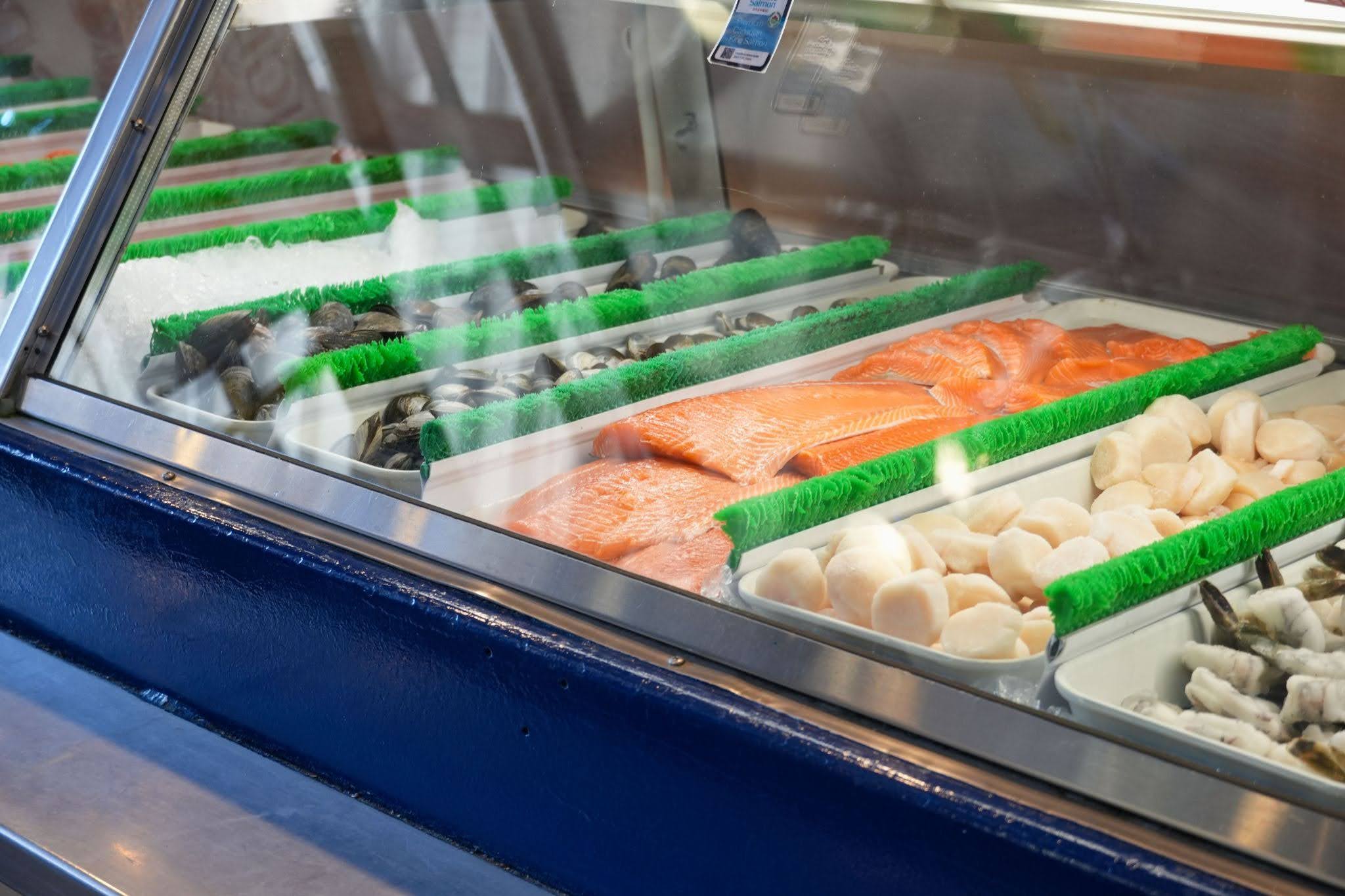
Flat seafood sales usually occur due to a lack of confidence. The case, the labels, the person behind the counter, and the supply on the shelf all shape whether a shopper trusts what they’re looking at.
The fixes start with the case itself.
Quick checklist for growing seafood sales
- Keep the case to 8 to 12 well-chosen options.
- Merchandise frozen with the same effort as fresh.
- Translate shrimp counts into plain language, tied to a dish.
- Price everyday items steady. Save discounts for a real reason.
- Use signage that answers a question, not just names the product.
- Train counter staff to speak to sourcing, cooking, and sizing.
- Make weeknight buying easy with pre-portioned or marinated options.
- Treat returns and complaints as a signal, not just a refund.
Why do shoppers walk past the seafood case?
Shoppers walk past seafood because they’re unsure they’re making a good choice. The case asks them for a confident decision with almost no information to back it up.
Here’s what tends to hold them back at the case:
- Unfamiliar labeling: Terms like “previously frozen,” “wild caught,” or counts like 16/20 matter in the industry, but not at the counter.
- Uncertainty about freshness: Shoppers can’t always tell if fish looks the way it should, so they default to the safest option.
- No clear use case: A shopper might want something specific for dinner, but nothing at the case says which product fits.
- Fear of wasted purchase: Seafood costs more than most proteins, so a bad pick feels riskier.
- No guidance on the spot: With no one to answer a quick question, shoppers guess, and their guesses send them elsewhere.
Shoppers are avoiding the risk of getting it wrong. If you close that gap, pricing and promotions have a lot less work to do.
Does more variety in the seafood case increase sales?
More seafood variety doesn’t increase sales on its own. Past a certain point, it does the opposite.
Adding more seafood only helps when shoppers understand what they’re looking at and feel confident choosing between the options. A larger assortment can bring more people to the case, but it can also slow down buying decisions if every product starts to look the same.
How many seafood options are too many for one case?
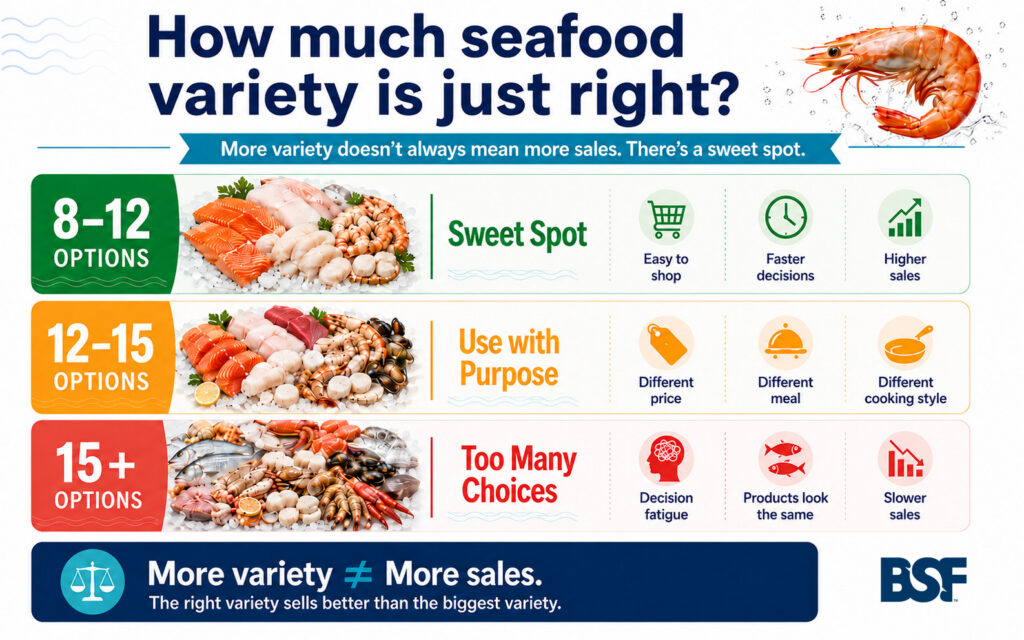
Somewhere past 12 to 15 total seafood options, most cases stop helping the shopper and start overwhelming them. A case built around 8 to 12 well-chosen options tends to move faster and sell better.
Start with species people already know how to buy. Salmon, shrimp, cod, and tilapia cover most weeknight decisions without any explanation. Add one or two more, like swai or crab, only if they give shoppers a reason they wouldn’t already have, like a lower price point or a different meal occasion.
On shrimp, three sizes are plenty. One smaller size for tacos and bowls, another mid-range size for skewers, and one larger size for scampi, where the shrimp is the star of the plate.
Is fresh seafood really outselling frozen?
Fresh doesn’t automatically outsell frozen. In a lot of stores, frozen seafood sells just as well, sometimes better, once shoppers understand what they’re buying.
Frozen at sea, often shortened to FAS, means the fish gets frozen within hours of being caught, right on the boat. That locks in quality before it ever has a chance to sit around. A lot of “fresh” fish at the counter was frozen at some point, too, just thawed before it hit the case.
I told Fox News this a while back. Beef and chicken have USDA grading, seafood doesn’t, so trust in the source matters more here than anywhere else in the store.
What makes a shopper trust the frozen case
Shoppers trust the frozen case when they understand what they’re looking at and can see proof right there on the package.
Here’s what builds that trust, and what turns it into a sale.
- Individually quick frozen (IQF): Each piece of shrimp or fish is frozen individually, rather than in a block, so a shopper can pull out exactly what they need and leave the rest sealed.
- A visible catch date or “frozen at sea” label: Seeing proof on the package builds more trust than any general explanation of the terms.
- A clear use case right on the shelf: A small sign next to the shrimp saying “perfect for tacos and stir fry” turns a shopper who trusts frozen into one who knows exactly what to make tonight.
Why do shrimp size labels confuse shoppers at the counter?
Shrimp size labels confuse shoppers because the numbers don’t mean anything without context. A count like 16/20 tells you how many shrimp make up a pound, so smaller numbers mean bigger shrimp. Nobody explains that at the case.
Here’s what actually helps:
- Translate the count into plain language: A sign that says “16/20, about 16 to 20 per pound, great for scampi” tells a shopper more in one line than the number ever will on its own.
- Tie the count to a dish: A shopper deciding between tacos and shrimp cocktail wants to know which count fits the meal.
- Keep the count visible on the price tag: A shopper standing at the case is comparing tags, and fine print on the bag rarely gets a second look.
What in-store signage actually helps seafood sales
Signage helps most when it answers a question the shopper already has. A sign that reads “Atlantic Salmon” tells shoppers what they’re looking at. “Great on the grill, ready in 12 minutes” tells them why to buy it.
The signs that actually move seafood tend to do a few specific things.
- Explain sourcing in one line: Something like “wild caught off the coast of Alaska” gives a shopper a quick sense of where the fish came from. A GlobeScan survey found that ⅔ of consumers trust a recognized sourcing certification, and more than half say it directly shapes what they end up buying.
- Answer a cooking question before it’s asked: A sign near cod that says “pairs well with a quick pan sear” saves the guesswork.
- Keep claims specific: “Sustainably sourced” means little on its own. A sign that says “Responsibly farmed, third-party certified” gives a shopper something concrete.
- Sit at eye level: A sign buried below the case or stuck on a side wall gets skipped.
Good signage does the job that a knowledgeable person behind the counter would do, just in writing.
Does having a real person behind the counter actually sell more seafood?
A knowledgeable person behind the counter answers the exact questions that make shoppers hesitate. This can help your customers make the buying decision.
As I told SeafoodSource when they covered our NASCAR partnership, “For decades the message we’ve been hearing from shoppers is, I don’t know how to prepare it, I don’t know much about it.”
Signage and labels can only go so far. The value is in having someone who can speak to the product with specifics. It should be a person who knows that today’s cod came in fresh versus what’s been sitting, or a budget-friendly option worth suggesting to a shopper hesitating over price.
3 out of 4 seafood shoppers say it’s important that their store has seafood counter staff, and that number climbs to 84% among frequent seafood buyers. That kind of expectation takes real training. Retailers who invest in that training, even something as basic as making sure staff know the difference between their shrimp counts, tend to see it pay off directly in seafood sales.
How should retailers price seafood without hurting future sales
Anchor your everyday items at a fair, steady price. Salmon, shrimp, and cod are weekly buys, and those prices should barely move. A shopper who sees shrimp at $9.99 most visits starts to trust that number.

Keep pricing consistent across fresh, frozen, and value-added versions of the same fish. If fresh cod runs $8.99 a pound but the frozen version is priced like a different product, shoppers notice. Frozen doesn’t need to be dramatically cheaper. It needs a price that makes sense next to the fresh case.
Save discounts for real reasons. A limited run of wild sockeye, a short-shelf-life item, or a genuine seasonal catch are discounts that a shopper understands. Do that consistently, and shoppers buy the fish without waiting for a markdown.
What can retailers do to make seafood easier to buy on a weeknight?
Make seafood as grab-and-go as anything else in the case. On a weeknight, shoppers are looking for something they can get on the table without much thinking.
A few changes to the case make that possible:
- Pre-portioned packs: Individually sealed shrimp or salmon portions save shoppers from guessing how much to buy for four people or from thawing more than they need.
- Marinated or seasoned options: A bag of shrimp already tossed in a simple marinade removes a step that a tired shopper doesn’t want to think about after work.
- Realistic cook times on the label: “Ready in 10 minutes” tells shoppers it fits into a weeknight before they even pick it up.
- Pairing suggestions right at the case: A small sign next to tilapia suggesting a quick sheet pan dinner with vegetables gives a shopper the whole plan, not just the protein.
These ideas just meet the shopper who’s deciding between seafood and something faster on a Tuesday, and give seafood a real shot at winning that decision.
Where to start if you want to sell more seafood
Start with whatever’s creating the most hesitation in your case right now. For some stores, that’s confusing labels. For others, it’s a case with too many options and no clear signal on what to buy.
Pick one thing from this list and change it this month. Small, specific fixes add up faster than a full department overhaul, and they show results sooner, too.
It’s the same thing we focus on with retail partners at BSF. Give shoppers less to guess about, and more they can trust at a glance.
FAQ
Why do seafood sales drop in winter or after the holidays?
Seafood sales are occasion-driven. They spike around holidays, Lent, and summer grilling, then drop once those moments pass without another reason to buy. Building interest around everyday meals helps smooth that drop.
Should grocery stores carry more frozen seafood than fresh?
Not more, but equal effort. Frozen deserves the same merchandising attention as fresh, since many shoppers already trust it once it’s presented well.
What’s a good seafood case size for a mid-size grocery store?
Case size should match how many options you’re actually stocking well. A tightly curated 8 to 12-option case usually fits comfortably in a standard mid-size case without requiring extra footprint.
How do you reduce seafood shrinkage and waste at the case?
Ordering closer to actual sell-through, rather than overstocking for appearance, is the biggest lever. Rotating older stock forward and pricing near sell-by dates before quality drops also cuts waste without resorting to trust-damaging discounts.