Farmed fish isn’t “bad.”
Some farmed seafood is the best product in the case. Some of it is rough. The word on the label doesn’t decide which one you’re getting. The species, the farm, the handling, and the source do.
But somewhere along the way, “farmed” quietly became a bad word in seafood. Wild got the halo. Farmed got the side-eye.
So let me say the thing I actually believe, plainly. “Farmed vs. wild” is the wrong fight. It’s not a quality contest. It’s a category. Like asking whether “restaurant food” is good.
Some of the best meals of your life were made in a restaurant. So were some of the worst.
Farmed seafood is exactly the same. There is outstanding farmed fish, and there is rough farmed fish, and the difference has almost nothing to do with the word on the package.
It has everything to do with how it was raised, how it was handled, and whether anyone was willing to stand behind it.
I’ve eaten farmed fish that was cleaner, more consistent, and better handled than “fresh” wild fish that had been sitting on ice for four days. I’ve also seen farmed product I wouldn’t put on my own table. Same word on the label. Completely different fish.
“Is farmed fish bad?” is a dead end. The question that actually gets you somewhere is different. Is THIS one good, and how do I tell?
This is the first post in a series where I’ll be breaking down the most common seafood myths, one at a time.
Let’s Kill The Myth That’s Costing You Good Dinners
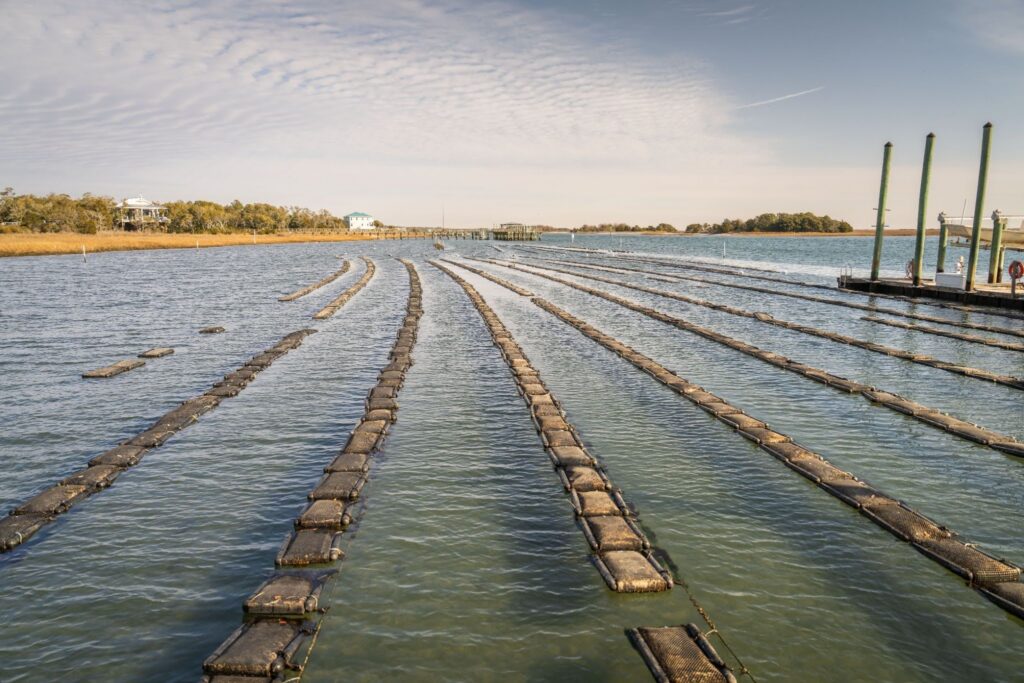
Farming seafood isn’t some modern shortcut. People have been raising fish and shellfish for thousands of years.
Today, farming is where a huge share of the world’s seafood comes from, and it has to be, because wild stocks can only give so much.
When it’s done well, farm-raised seafood is one of the most sustainable, consistent, and affordable proteins you can put on a plate.
Consistent supply. Predictable size. Available year-round. Priced so a family can actually afford fish on a Tuesday.
When it’s done poorly, it’s like anything done poorly. Not great. The mistake most people make is treating “farmed” as the verdict. It’s not the verdict. It’s the starting line.
What matters is the five things that happen after that word.
The 5 Things That Actually Decide Whether Farmed Seafood Is Good

1. The Species
The species matters because a species that farms well tends to give you a cleaner, more consistent product with far less effort from everyone in the chain.
The natural fits include shellfish (oysters, mussels, clams), rainbow trout, barramundi, catfish, and species like swai/pangasius. These grow efficiently, take well to good conditions, and land on your plate mild and reliable.
Salmon and shrimp are the two giants of farmed seafood, produced at excellent standards across most of the industry, but they’re also where the quality gap between a great operation and a careless one is widest. So they’re the two where the other four factors matter most.
2. How Was It Raised
You’re looking for seafood operations that do three things:
Feed responsibly. Good farms manage what goes in the water and how efficiently feed converts to healthy fish.
Don’t overcrowd. Fish raised with room and clean water are healthier fish. Crowding is where a lot of problems start.
Manage the environment. Clean, well-circulated water, whether that’s ocean pens, ponds, or modern land-based recirculating systems, shows up on the plate.
You usually can’t inspect a farm yourself. But you can buy from sources that talk openly about how their fish are raised, because the ones doing it right are almost always happy to tell you, and the ones cutting corners go quiet.
3. How Was It Harvested and Handled
Most seafood quality is won or lost after the fish leaves the water, not before. A fish can be ruined in 48 hours. Here’s how to protect it.
Speed. How fast was it harvested, processed, and chilled or frozen? Hours matter.
Temperature. Cold, and staying cold, is the whole ballgame. A cold chain that breaks even once can undo everything.
Care. Clean handling, proper processing, no rough treatment.
This is also why frozen farmed seafood is often better than the “fresh” version sitting in the case. Flash-frozen at peak beats thawed-and-aging almost every time.
4. Transparency
This is the one that ties it all together, and it’s the same test I apply to any seafood, farmed or wild, local or imported.
Can the person selling it tell you where it came from and how it got to you? Not a vague “it’s from the ocean.”
An actual answer. A good source can trace the product and is comfortable standing behind it. A weak source gets fuzzy fast.
That fuzziness is information. When nobody wants to attach their name to a fish, there’s usually a reason. Transparency isn’t paperwork for its own sake. It’s the difference between “trust me” and “here, look.”
5. Certifications
You’ll see logos. BAP (Best Aquaculture Practices), ASC (Aquaculture Stewardship Council), and others.
These are worth something. They mean an operation met a real standard and was willing to be checked.
But here’s where I’ll be straight with you, the same way I am about the word “local.”
A certification confirms a standard was met at some point. It says nothing about how that fillet was handled between there and your hands today.
The badge plus a transparent source that stands behind the product?
Now you’ve got something. The badge alone, from someone who can’t answer a single question about the fish? Less than you think.
Don’t stop thinking the moment you see a logo. Use it as one input, not the whole decision.
How To Judge The Fish Once It’s Actually In Front Of You
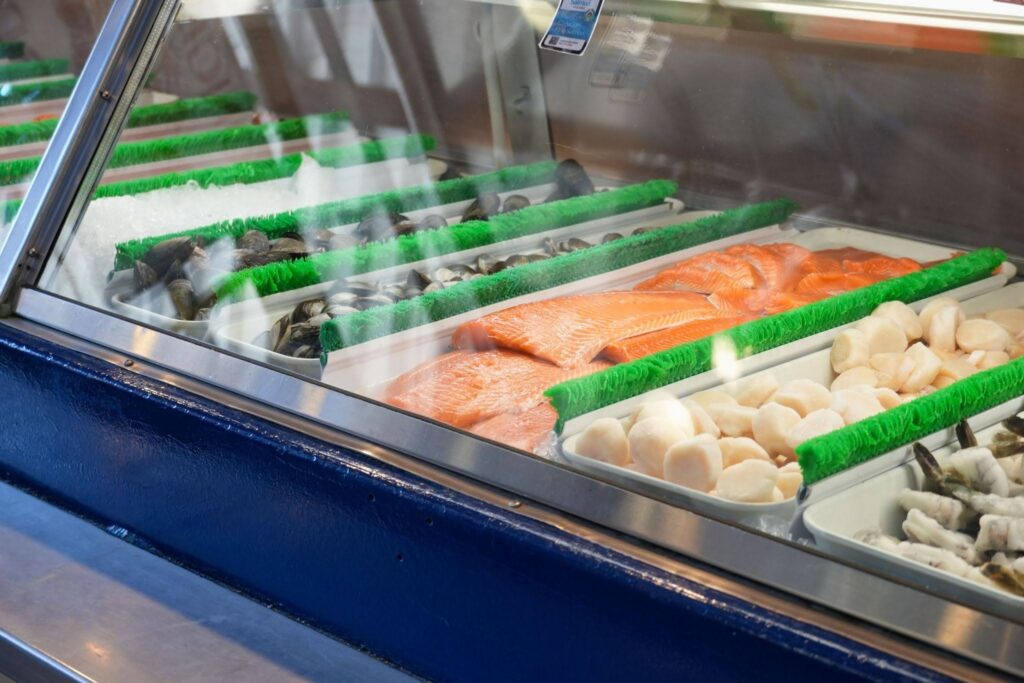
Sourcing gets you most of the way. But you can still read the product with your own eyes and nose. Farmed or wild, the tells are the same.
Smell. Fresh seafood smells clean, like the ocean or clean water. It should never smell “fishy” or sour. That smell is age, not species.
Look. Flesh should look firm, moist, and bright, not dull, gray, or dried at the edges.
Texture. It should spring back, not stay dented when you press it (if you can).
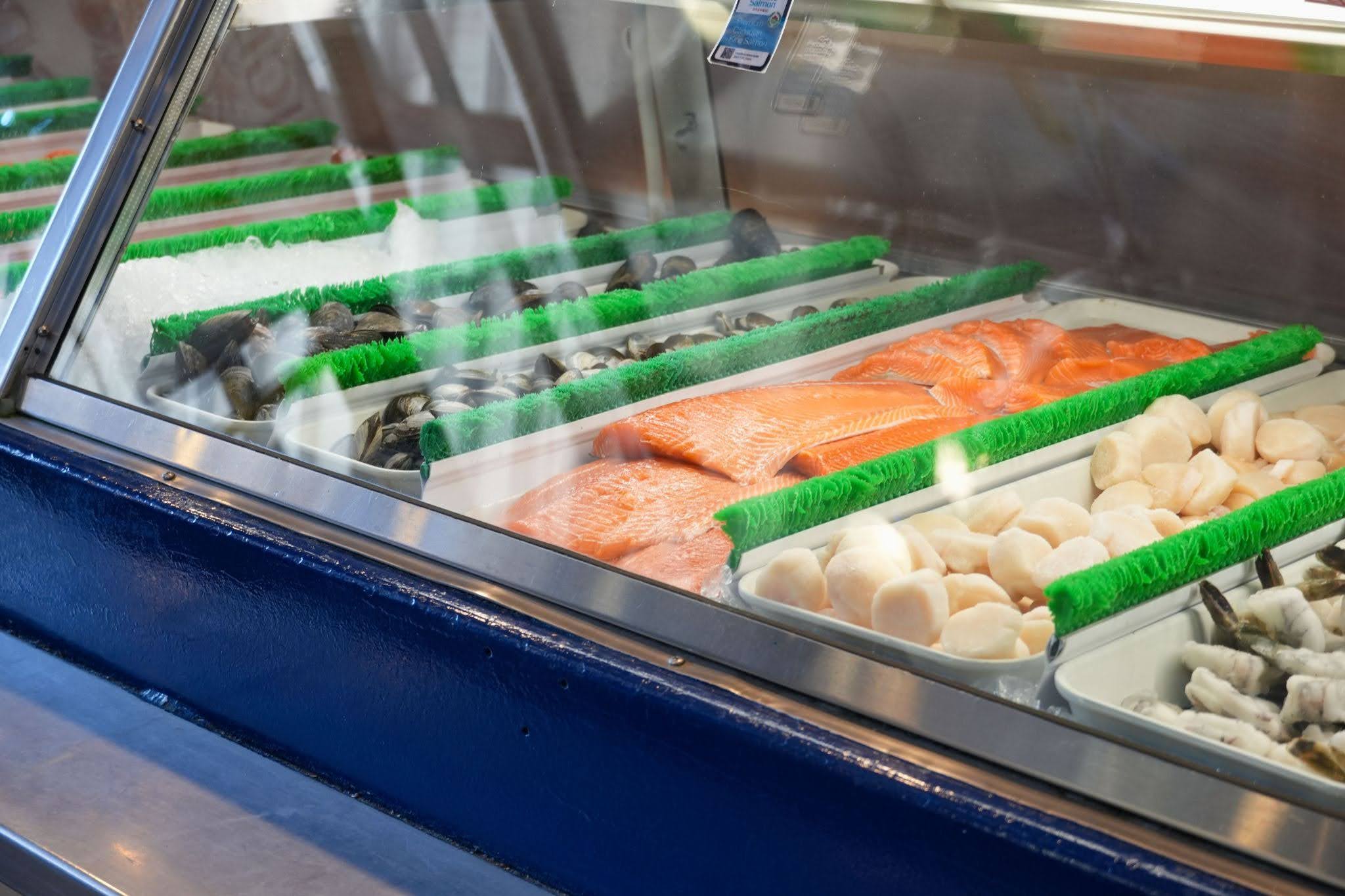
The ice and the case. Is the counter clean? Is the product cold, well-iced, and cared for, or is it sitting in a puddle? A messy case tells you how much the whole operation cares.
On frozen, look for solid, well-packaged fillets with minimal frost or ice crystals inside the bag. Heavy freezer burn or a bag full of ice means it thawed and refroze somewhere along the way.
None of this requires expertise. It requires paying attention for about ten seconds.
If You’re Buying Seafood For A Business, Not Your Family, Do This
Same principles, higher stakes. If you run a seafood category or a supply program, “is it farmed?” is nowhere near the right question.
Ask questions like “where does this come from and can you show me the trace?” or “how fast is it processed and frozen after harvest?”
A certification is a starting point. Consistency at scale, backed by a source that answers all five without flinching, is what keeps a program alive and a category growing.
Buyers don’t stay because of a logo on a box. They stay because the product shows up the same way, every time, and their customers come back for it.
The Bottom Line When It Comes To Farm-Raised Vs. Fresh Seafood
Farm-raised seafood isn’t the compromise a lot of people think it is.
Done right, it’s one of the best, most reliable, most sustainable ways to get great seafood on a plate, and it’s a huge part of how the world actually eats fish.
So stop asking whether “farmed” is good or bad. That question has no answer, because it’s the wrong question.
Ask who raised it, how it was raised, how fast and how cold it was handled, and whether someone will stand behind it.
Answer those, and you’ll pick better fish than 95% of shoppers, and most of the “experts” who still think one word on a label tells the whole story.
The label isn’t the point. The practices are.
If you take one thing from this article, take this. “Farmed” is not a verdict. Neither is “wild,” “fresh,” “frozen,” “local,” or “imported.”
At BSF, we’ve spent 75 years learning where the good fish comes from and what separates a supplier who says the right things from one who can prove them. If you have a question about a specific product, a specific species, or a seafood program you’re trying to build, reach out.
And if this cleared something up, stick around. There are plenty of seafood myths left, and I plan on getting to all of them.